


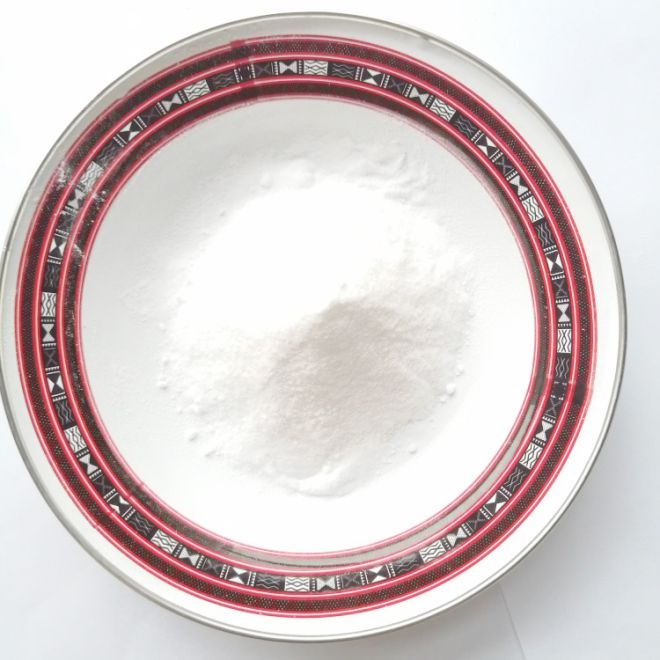
Struggling to tell if your hexagonal boron nitride powder is a superstar lubricant or just very expensive dust? Don’t worry—everyone’s lab shelf has at least one mysterious white jar of “probably important” powder.
To fix this, focus on key properties: particle size, purity, thermal stability, and lubrication performance. Check data sheets, compare with standards, and validate against reports like this materials overview: Hexagonal Boron Nitride (h-BN) Properties.
🔹 Crystal structure and morphology of hexagonal boron nitride powder
Hexagonal boron nitride (h‑BN) has a graphite‑like layered structure. Its plates stack in flat sheets, giving the powder high stability, low friction, and strong design flexibility.
1. Layered crystal lattice
The hexagonal lattice arranges boron and nitrogen in honeycomb sheets. Strong in‑plane bonds and weak interlayer forces allow easy sliding between layers.
- Planar sp² bonding
- Interlayer spacing ~0.33 nm
- High in‑plane strength
2. Particle shapes and agglomeration
h‑BN powder often appears as platelets or flakes. Fine particles may form soft agglomerates that break apart under light shear or milling.
- Flake and platelet morphologies
- Soft, non‑abrasive edges
- Easy to disperse with proper mixing
3. Influence of synthesis route
Reaction temperature, precursor choice, and additives strongly affect particle size and crystallinity. Higher temperatures usually increase crystal order and aspect ratio.
| Process | Typical Result |
|---|---|
| CVD | Ultra‑pure, thin platelets |
| Solid‑state | Bulk, larger crystals |
4. Relation to other boron products
Producers often integrate h‑BN with High-purity industrial-grade boric acid and precursors used in Borate Fertilizer/Boron Fertilizer, achieving stable quality and reliable boron chemistry control.
🔹 Thermal stability and heat resistance characteristics of h‑BN materials
h‑BN remains stable at very high temperatures in inert or reducing atmospheres. It resists thermal shock, making it a strong choice for extreme heat management and insulation.
1. High temperature resistance
In nitrogen or argon, h‑BN can tolerate temperatures above 1800 °C. In air, oxidation starts gradually near 900–1000 °C, depending on purity.
- Continuous use in inert gas to ~1800 °C
- Short‑term peaks possible at higher temperatures
- Oxidation rate depends on surface area
2. Thermal conductivity anisotropy
Heat flows much faster along the basal planes than across them. Engineers use this to direct heat laterally while keeping electrical insulation.
| Direction | Typical Thermal Conductivity (W/m·K) |
|---|---|
| In‑plane | 200–400 |
| Through‑plane | 20–40 |
3. Thermal expansion behavior
h‑BN shows low thermal expansion, which reduces cracking in composites. Matching expansion with metals and ceramics helps prevent stress at joints.
- Low coefficient of thermal expansion
- Good dimensional stability
- Useful in repeated heat cycles
4. Example temperature performance chart
The chart below compares estimated oxidation mass loss of h‑BN at several temperatures in air.
🔹 Electrical insulation and dielectric properties in various h‑BN applications
h‑BN combines high dielectric strength with strong thermal conductivity. It insulates sensitive electronics while spreading heat away from hotspots.
1. Dielectric strength and resistivity
h‑BN has high volume resistivity and withstands strong electric fields, even at elevated temperatures, when properly processed and compacted.
- Excellent insulator up to high voltages
- Stable dielectric constant over wide frequency range
2. Use in electronic packaging
Manufacturers add h‑BN to resins, greases, and ceramics to cool power devices, LEDs, and inverters without sacrificing insulation safety.
| Application | Function of h‑BN |
|---|---|
| Thermal pads | Heat spreader and insulator |
| Encapsulation | Dielectric filler |
3. Role alongside other boron materials
In advanced ceramics, h‑BN often appears with other boron compounds such as Boron Nitride components designed for crucibles, release agents, and high‑voltage systems.
🔹 Lubrication performance, particle size, and surface area of h‑BN powder
h‑BN powder acts as a solid lubricant. Its layered plates slide over one another, lowering friction in high‑temperature and vacuum conditions.
1. Solid lubrication behavior
The weak bonds between layers give h‑BN a low friction coefficient, even when oils fail or evaporate under heat or vacuum.
- Non‑toxic, non‑carbon lubricant
- Stable in reactive metal processing
2. Effect of particle size
Fine particles coat surfaces evenly, while larger flakes offer better load‑bearing. Optimal size depends on gap width and surface roughness.
| Size Range | Typical Use |
|---|---|
| <1 µm | Coatings, greases |
| 1–10 µm | Plastic and rubber fillers |
3. Surface area and dispersion
Higher surface area improves interaction with binders but can increase viscosity. Proper dispersants and mixing avoid hard agglomerates.
🔹 Safety, handling guidelines, and quality considerations of Joylong h‑BN products
h‑BN is generally regarded as low hazard, but users should control dust, store it correctly, and verify consistent quality for demanding industrial uses.
1. Safe handling practices
Use local exhaust, avoid breathing dust, and wear basic PPE such as gloves, goggles, and dust masks during mixing and transfer operations.
- Keep containers closed
- Prevent dust buildup on floors and equipment
2. Storage and stability
Store h‑BN powder in dry, sealed bags or drums. Avoid moisture, cross‑contamination, and strong oxidizers to maintain performance.
- Label containers clearly
- Use first‑in, first‑out rotation
3. Key quality indicators
Joylong typically controls purity, particle size distribution, and phase composition to meet precise customer specifications and keep batch‑to‑batch variation low.
| Parameter | Importance |
|---|---|
| Chemical purity | Prevents electrical leakage |
| Size distribution | Controls flow and coating quality |
Conclusion
Hexagonal boron nitride powder combines high heat resistance, strong electrical insulation, and solid lubrication in one material. Its layered structure enables flexible design for many advanced systems.
With controlled particle size and purity, h‑BN supports reliable performance in electronics, metalworking, and composite materials, while straightforward handling rules help maintain safety and quality in daily use.
Frequently Asked Questions about hexagonal boron nitride powder
1. Is hexagonal boron nitride powder electrically conductive?
No. h‑BN is an excellent electrical insulator with very high resistivity, which makes it ideal for thermal management in electronic and high‑voltage devices.
2. Can h‑BN replace graphite as a lubricant?
In many high‑temperature or vacuum environments, yes. h‑BN offers similar low friction but does not contain carbon, so it is safer with reactive metals.
3. How should I disperse h‑BN powder in resins or oils?
Use gradual addition, suitable dispersants, and high‑shear mixing when possible. Pre‑wetting the powder often improves stability and reduces agglomeration.
4. What factors most affect thermal conductivity of h‑BN composites?
Key factors include particle loading, alignment of platelets, particle size distribution, and quality of bonding between h‑BN and the host matrix.