

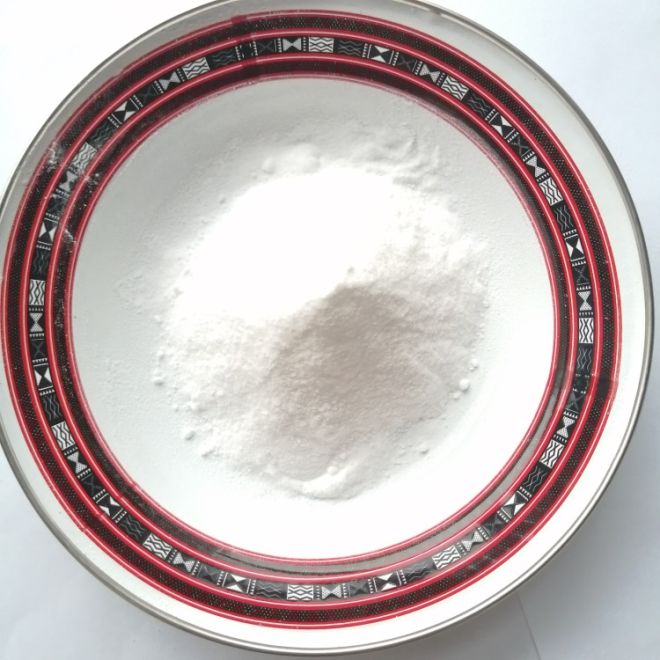
Heavy magnesium carbonate trends got you staring at charts like modern art? You’re not alone—spotting real demand, prices, and buyers by 2026 can feel like trying to trade rocks with a blindfold on.
To fix this, use clear market data, compare supplier quotes, and lean on trusted forecasts like the Grand View Research Magnesium Carbonate Market Report for solid 2026 outlook and buyer insights.
✅ Global demand trends shaping the heavy magnesium carbonate market by 2026
By 2026, the heavy magnesium carbonate market will grow steadily, driven by flame-retardant plastics, rubber, coatings, and eco-friendly materials replacing more hazardous inorganic fillers worldwide.
Buyers will value stable quality, low impurity levels, and reliable logistics. Producers that offer technical support and tailored grades will capture higher-value, long-term contracts.
1. Macroeconomic recovery and construction-driven consumption
Rebounding construction and infrastructure projects in Asia, the Middle East, and Latin America will lift heavy magnesium carbonate demand in cement, panels, sealants, and protective coatings.
- Higher need for fire-safe building materials
- Filler use in flooring and wall systems
- Shift toward low-smoke formulations
2. Regulatory push for safer flame-retardant systems
Stricter fire safety and chemical rules in the EU, US, and China will support inorganic flame-retardant systems based on magnesium carbonate and related carbonate products.
- Lower toxicity versus halogenated systems
- Strong fit in cable, wire, and electronics
- Compatible with Sodium bicarbonate (baking soda) synergists
3. Upgrading to higher-purity and specialized grades
Buyers increasingly request tight particle size control, low heavy metals, and stable bulk density for precise dosing and high-performance formulations.
| Specification | Buyer focus |
|---|---|
| Purity | Consistent ≥98% |
| Moisture | Low, stable during storage |
| Particle size | Narrow distribution |
4. Integrated carbonate portfolios strengthen supplier appeal
Suppliers offering heavy magnesium carbonate together with Stable light magnesium carbonate and related carbonates help buyers standardize sourcing and reduce technical qualification time.
- Single quality system across all grades
- Shared logistics and warehousing
- Broader technical support from one team
📊 Key application sectors and evolving industrial usage patterns worldwide
By 2026, industrial users will adopt heavy magnesium carbonate as a safe, functional filler in polymers, rubber, coatings, and specialty chemicals, replacing less sustainable materials.
Demand will grow fastest in flame-retardant compounds, cable materials, and elastomers where heat stability, smoke suppression, and low toxicity are critical for compliance.
1. Flame-retardant plastics and wire & cable
Heavy magnesium carbonate will play a stronger role in halogen-free cable compounds and engineering plastics, improving fire resistance and smoke performance at competitive cost.
2. Rubber, seals, and elastomer compounds
In rubber, heavy magnesium carbonate serves as a reinforcing filler, improves dimensional stability, and supports better processing compared with some traditional mineral fillers.
- Used in hoses, gaskets, and seals
- Helps balance hardness and flexibility
- Supports white and light-colored compounds
3. Coatings, inks, and surface treatments
Coatings producers use heavy magnesium carbonate for matting, rheology control, and cost-effective spacing, especially in industrial primers and protective systems.
| Use area | Main function |
|---|---|
| Industrial coatings | Matting, filler |
| Primers | Cost control, opacity |
| Inks | Rheology tuning |
4. Specialty chemicals and technical ceramics
Heavy magnesium carbonate also enters catalyst carriers, specialty ceramics, and thermal insulation materials, often alongside 99.2% stable high-purity barium carbonate in advanced formulations.
- Controlled decomposition to MgO
- Useful in high-temperature systems
- Supports precise porosity design
🌍 Regional market outlook: growth hotspots and emerging consumption centers
By 2026, Asia-Pacific will lead heavy magnesium carbonate growth, while the Middle East and Eastern Europe become important emerging consumption regions.
Local sourcing, port access, and flexible packaging will strongly influence supplier selection in these fast-growing markets.
1. Asia-Pacific: core demand and capacity hub
China, India, and Southeast Asia will combine strong local supply with rising demand from construction, cables, and polymer compounding clusters.
- Large end-user base
- Active exports to EU and US
- Ongoing capacity upgrades
2. Europe and North America: quality- and compliance-driven markets
Mature but stable markets with higher technical and documentation needs, especially for automotive, building, and electrical applications.
| Region | Main driver |
|---|---|
| EU | REACH and fire safety laws |
| US | Construction and infrastructure |
3. Middle East, Africa, and Latin America: rising import demand
These regions will import more heavy magnesium carbonate for cables, plastics, and building materials, favoring suppliers with stable shipping and stock points.
- Growing cable projects
- Need for reliable lead times
- Preference for bulk and jumbo bags
🧪 Quality, specifications, and performance factors valued most by industrial buyers
Industrial buyers focus on purity, consistent particle size, and low moisture to secure predictable processing and stable product performance.
They also expect strong documentation and support, including COAs, safety data, and technical guidance on formulation and process tuning.
1. Chemical purity and impurity profile
Buyers require controlled heavy metals, low chloride and sulfate, and stable loss on ignition to protect downstream product quality and regulatory compliance.
- Stable MgCO₃ content
- Low trace metals
- Repeatable batch-to-batch results
2. Physical form, flowability, and handling
Consistent bulk density, flow behavior, and dust levels reduce production stops and improve dosing accuracy in continuous lines.
| Parameter | Buyer expectation |
|---|---|
| Bulk density | Narrow tolerance window |
| Particle size | Low fines, few oversize |
| Dust | Minimized for safe handling |
3. Documentation, testing, and technical service
Large buyers ask for regular COAs, SDS, third-party tests, and quick technical support during qualification and process change projects.
- Standard and customized specs
- Support for pilot trials
- Clear packaging and labeling
🏅 Why professional buyers increasingly choose Joylong for stable long-term supply
Professional buyers turn to Joylong for consistent heavy magnesium carbonate quality, secure supply, and integrated carbonate product solutions.
Joylong’s technical team and flexible logistics help global customers lower risk, speed up qualification, and improve total cost of ownership.
1. Stable, scalable production and strict quality control
Joylong runs controlled production lines with strict QC, ensuring repeatable purity, particle size, and packaging quality across every shipment.
- Modern process control
- Batch traceability
- Regular lab verification
2. Integrated carbonate portfolio for multiple industries
Heavy magnesium carbonate is offered alongside light grades and other carbonate products, giving buyers a one-stop solution for related filler needs.
| Product family | Typical uses |
|---|---|
| Heavy magnesium carbonate | Flame-retardant plastics, rubber |
| Light magnesium carbonate | Pharma, food, personal care |
3. Global logistics support and responsive service
Joylong supports bag and bulk packaging, flexible MOQ, and sea or land delivery options, with responsive service for documentation and technical questions.
- Fast quotation and feedback
- Support for long-term contracts
- Custom labeling and packing
Conclusion
By 2026, heavy magnesium carbonate will gain share as a safe, reliable filler in plastics, rubber, and coatings. Buyers will reward suppliers that combine stable quality, documentation, and strong support.
Producers able to deliver consistent specifications, global logistics, and integrated carbonate portfolios will capture long-term partnerships in a steadily growing, more regulated market.
Frequently Asked Questions about use of heavy magnesium carbonate
1. What are the main industrial uses of heavy magnesium carbonate?
It is mainly used as a flame-retardant filler in plastics and cables, a reinforcing filler in rubber, and a functional filler in industrial coatings and technical ceramics.
2. How does heavy magnesium carbonate improve flame retardancy?
When heated, it releases CO₂ and water, cools the polymer surface, and dilutes flammable gases, helping reduce flame spread and smoke formation in halogen-free systems.
3. What specifications do buyers check before approving a new supplier?
Key checks include chemical purity, heavy metal content, particle size distribution, moisture, bulk density, and consistency over multiple trial batches with full COA data.
4. How should heavy magnesium carbonate be stored for best stability?
Store it in dry, covered areas, on pallets, in sealed bags. Avoid direct moisture and strong vibration to maintain flowability and stable bulk density.
5. Can heavy magnesium carbonate replace other mineral fillers one-to-one?
Not always. Formulators may need to adjust loading level, plasticizer, and processing conditions. Technical trials are recommended to reach the desired properties and cost balance.